Microsoft Research
10 stories

Microsoft ResearchResearchCalled to serve: Tech, research, and positive impact In the summer of 2010, postdoc Chris White worked with a multidisciplinary team at the Defense Advanced Research Projects Agency, or DARPA, to determine if a new approach to data analysis could…

Microsoft ResearchResearchProof-based general-purpose computing with Magnetar At a glance A new form of computing . Zero-knowledge proofs let you run a workload and receive, alongside the result, a short proof that the program ran correctly.
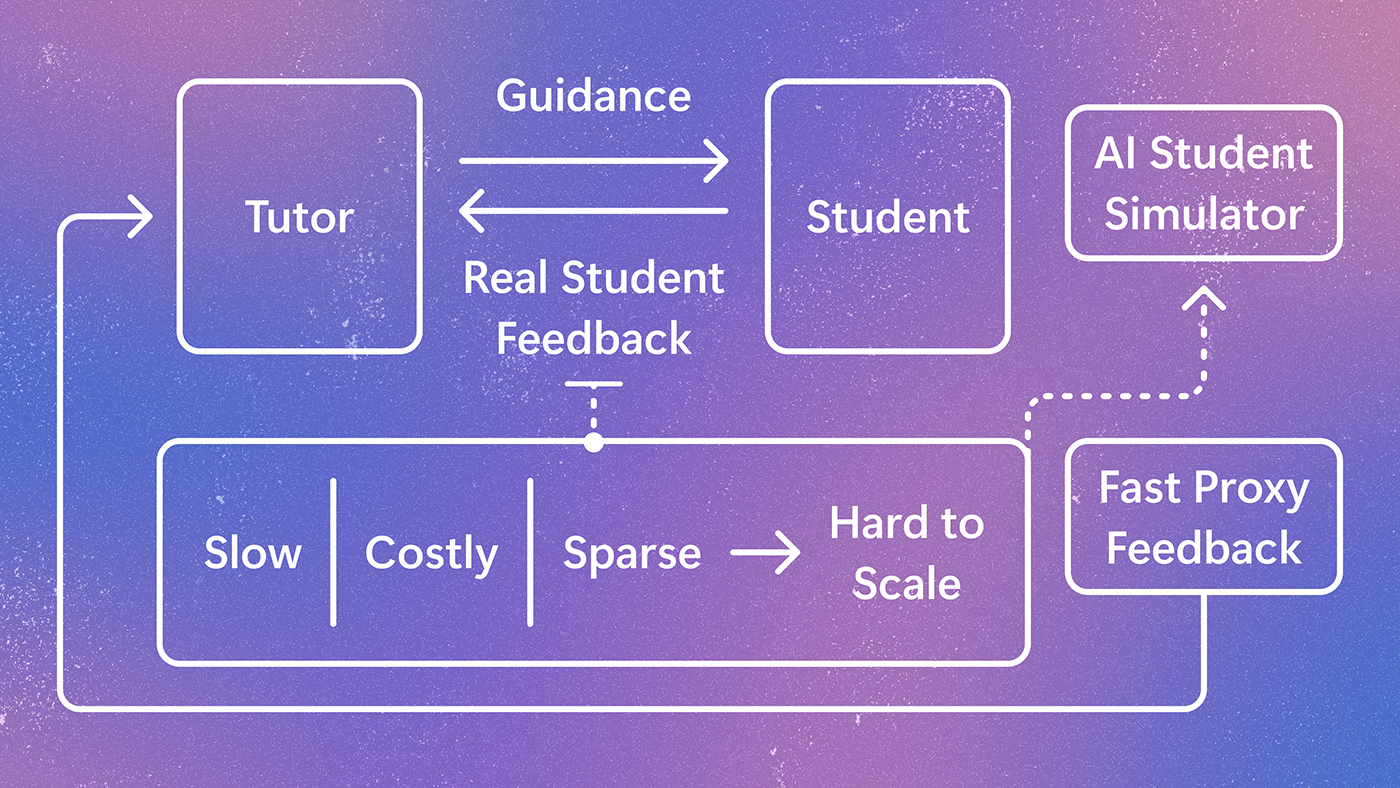
Microsoft ResearchResearchSimulating student learning for better AI tutoring At a glance StudentSim is a research system for evaluating and improving AI tutors before they are tested with real learners; it is not a product, is not deployed in classrooms, and is not intended…

Microsoft ResearchResearchAgent Lightning v1.0: A 3,500-Line Lightweight Agentic RL Framework for Training Agents with Real Harnesses At a glance Harnessed Agentic RL: Microsoft Research Asia introduces a training paradigm in which the same agent harness used in deployment participates directly in reinforcement learning, removing…

Microsoft ResearchResearchWhat AI gets wrong and what failure teaches us Jennifer Neville is a partner research manager at Microsoft who’s built a career around understanding and advancing AI for real-world use, and much like the human-AI interactions she’s been studying…

Microsoft ResearchResearchForecasting space weather risks on power grids At a glance End-to-end forecasting: A machine learning pipeline uses forecast-time solar-wind information to generate location-specific risk estimates for 66,935 substations in the continental United…

Microsoft ResearchResearchIntroducing Quine: An AI research system designed for the complexity of biology At a glance Quine (opens in new tab) is a research effort to create a multimodal world model of biology and an interactive harness connecting models, scientific tools, literature, and researchers.

Microsoft ResearchResearchOne year in: How Microsoft Research Asia – Singapore is advancing research, partnership and talent for real-world impact On July 24, 2025, Microsoft Research Asia – Singapore (MSRA – Singapore) opened its doors as Microsoft’s first research lab in Southeast Asia.

Microsoft ResearchResearchOffloaded inference for real-world physical AI robotics At a glance Challenges a core assumption in robotics AI: Our research shows that running physical AI inference exclusively on onboard GPUs can limit robot performance, battery life, and scalability…

Microsoft ResearchResearchImproving synthesis prediction of small molecules at scale with RetroChimera At a glance We report on the recent publication of our retrosynthesis model RetroChimera in the journal Nature (opens in new tab) .
Nothing matches this filter yet.