PyTorch Blog
10 stories
PyTorch BlogToolsIntroducing TorchTPU TL;DR TorchTPU is an open source collaboration between Google and Meta that introduces a native and principled PyTorch backend for Google TPUs.
PyTorch BlogToolsPyTorch Foundation Welcomes Nine New Members As Momentum Builds Around Open Source AI Center of Gravity New Platinum members include Nebius, Nscale and Shopify, deepening the PyTorch Foundation’s role as the intelligence layer for open source AI development Summary The PyTorch Foundation announced nine…
PyTorch BlogToolsNebius Joins the PyTorch Foundation as a Platinum Member The PyTorch Foundation, the vendor-neutral home for the open source intelligence layer, is announcing today that Nebius has joined as a Platinum member.
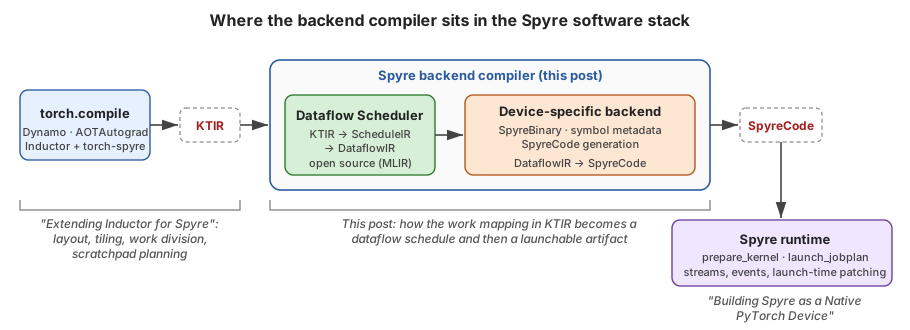
PyTorch BlogToolsFrom KTIR to SpyreCode: An MLIR Dataflow Backend for IBM Spyre TL;DR Torch-spyre’s Inductor decides how each kernel’s work is divided across Spyre’s cores and manages tensor residency between on-chip scratchpad and off-chip memory, and the backend compiler turns…

PyTorch BlogToolsNscale Joins the PyTorch Foundation as a Platinum Member London, U. K., 20 October 2026 – The PyTorch Foundation, the vendor-neutral home for the open source intelligence layer, is announcing today that Nscale has joined as a Platinum member.

PyTorch BlogToolsOne Search, Two Layers: Compiler Controls Inside PyTorch Helion using NVIDIA CompileIQ With Helion’s release last year, it aimed at enabling developers to write GPU kernels in PyTorch-native Python and let its powerful autotuner do the work that used to require hand-written Triton and…
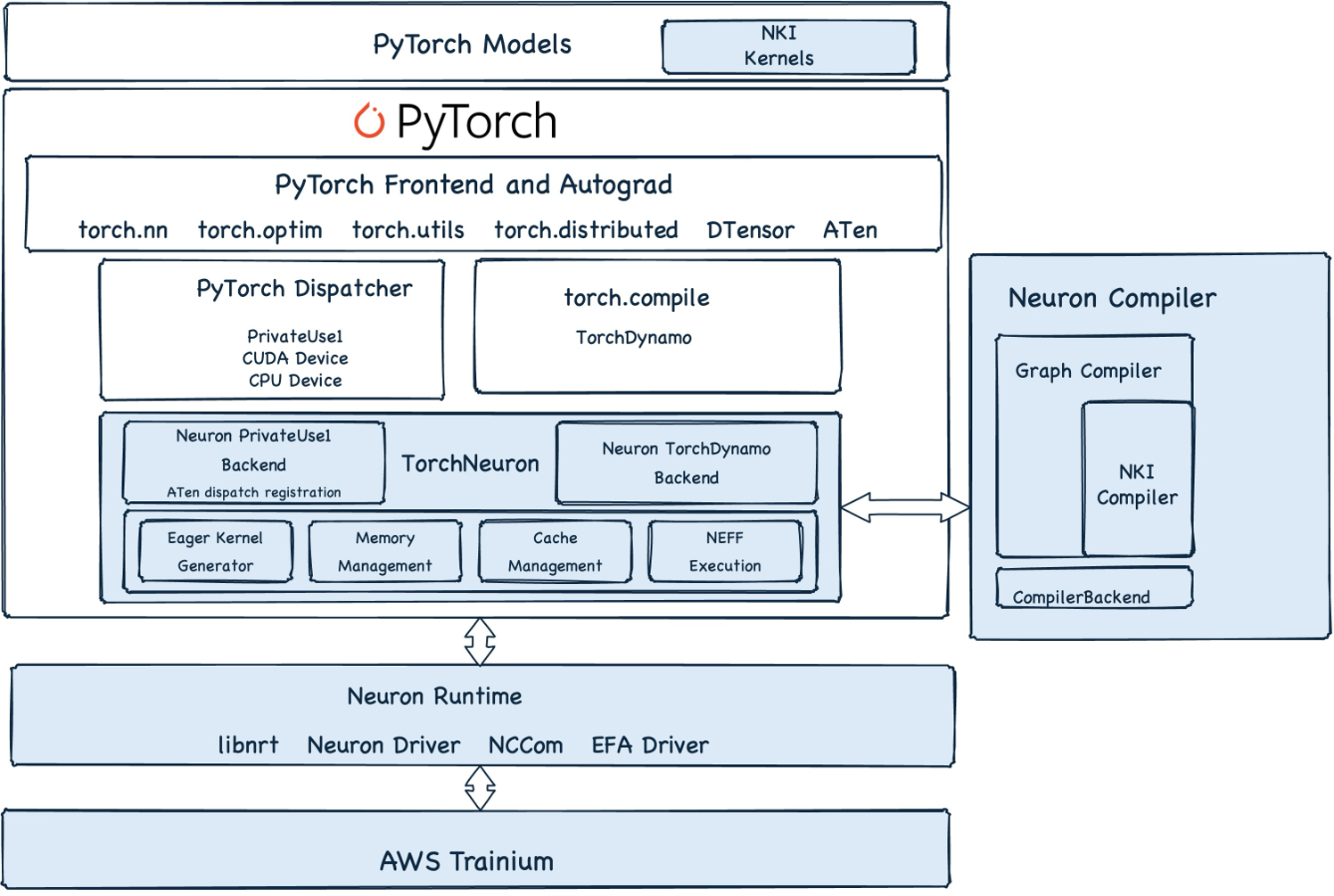
PyTorch BlogToolsIntroducing TorchNeuron: Native PyTorch backend for AWS Trainium Frontier models span language, video and audio, on architectures from dense and mixture-of-experts transformers to diffusion, state-space, world and structure-prediction models.

PyTorch BlogToolsBringing Elastically Deterministic Data Loading to TorchTitan with Zephon Why Zephon? The data that a model sees during training is one of the most powerful levers we have for influencing how well it performs.

PyTorch BlogToolsMuse Spark Is Now an Open-Weights Model Today, Meta is releasing the weights for Muse Spark Open , the most capable US open-weights model to date. It’s available today on Hugging Face under the Muse Model License.

PyTorch BlogToolsBringing ExecuTorch to Arm Cortex-M CPUs TL;DR Deploying PyTorch models on microcontrollers has historically required converting to other framework formats, maintaining separate toolchains, and debugging cross-framework numerical…
Nothing matches this filter yet.