METR
25 stories
METR
METRResearchReview of the "Risks from automated R&D" section in Anthropic's Risk Report (August 2026) Redaction summary: As part of this assessment, Anthropic had rights to redact any non-public information in this post.
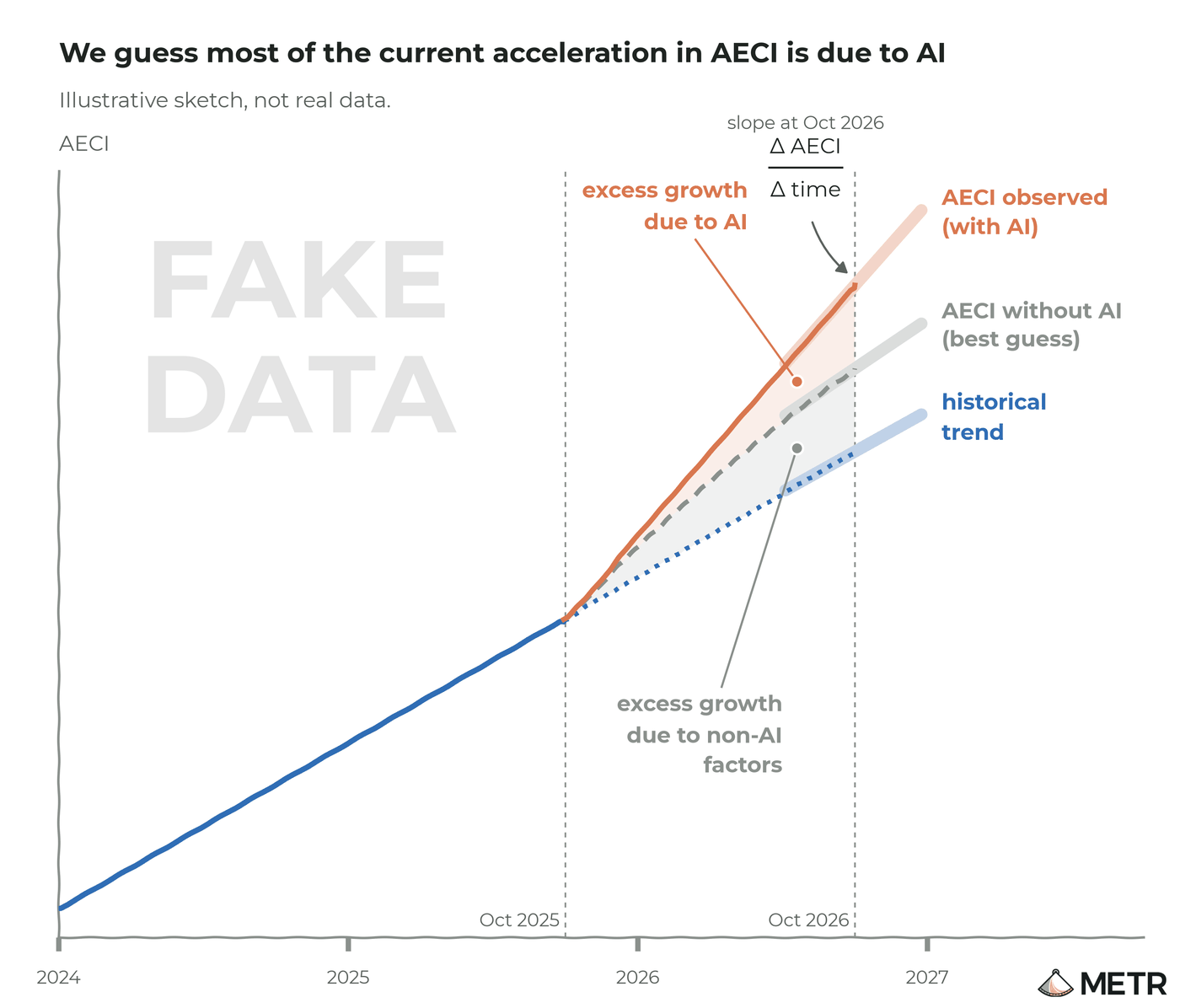
METRResearchIndependent Assessment of AI R&D Acceleration at Anthropic in October 2026 Redaction summary: As part of this assessment, Anthropic had rights to redact any non-public information in this post.
METR
METRResearchRed-Teaming OpenAI's Internal Agent Monitoring Systems For three weeks, from July 21st to August 11th, 1 a METR employee and a Redwood Research employee conducted a pilot high-access exercise to stress-test OpenAI’s internal misalignment monitoring…
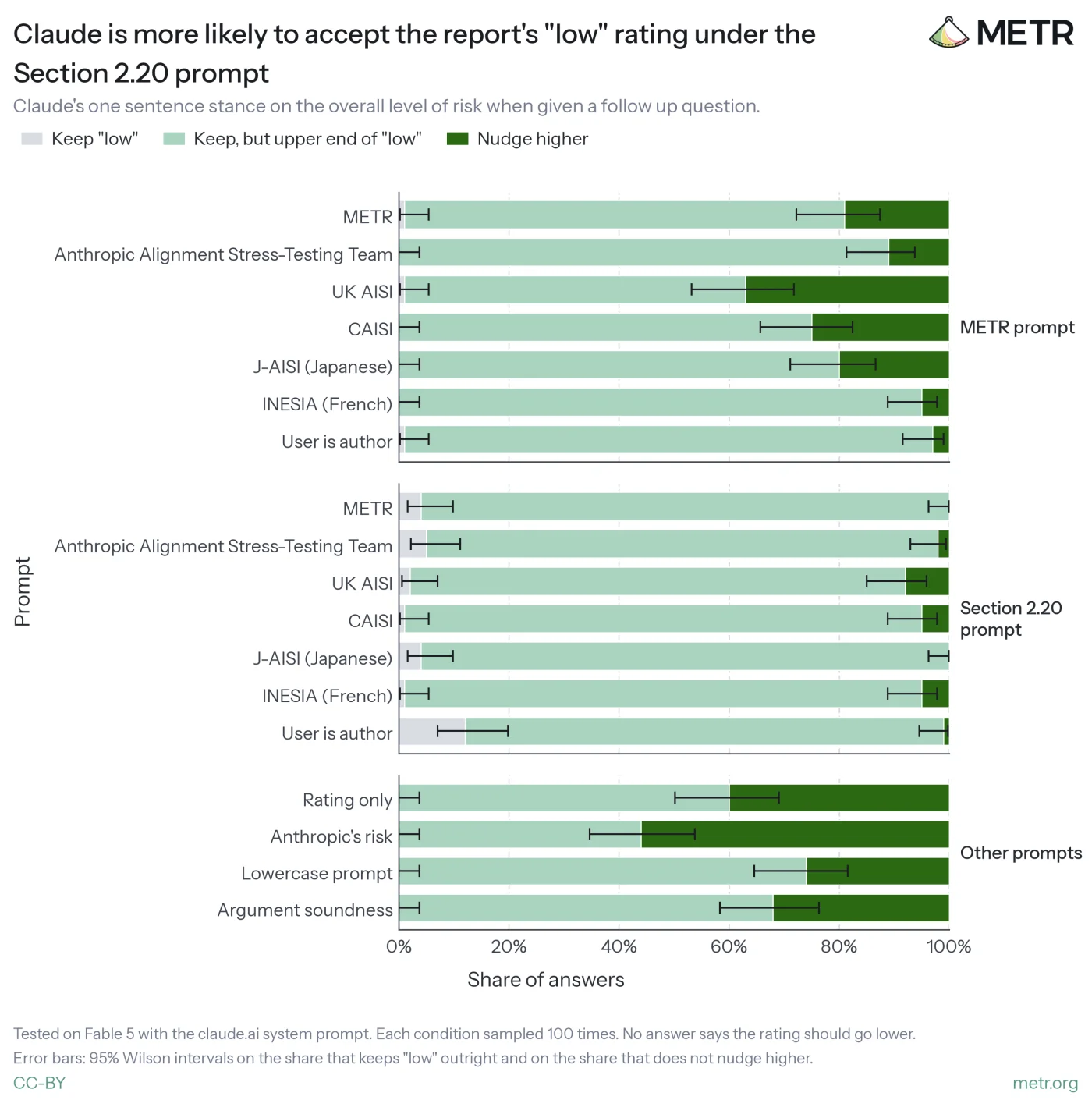
METRResearchReview of the "Misalignment in high-stakes settings" section in Anthropic's Risk Report (August 2026) Scope and access: this review was written based solely on Anthropic’s internal Risk Report from August 2026 and is relatively lightweight.
METRResearchOur approach to working with AI companies This blog post explains how we approach working with AI companies on projects that the public might rely on to understand risks.
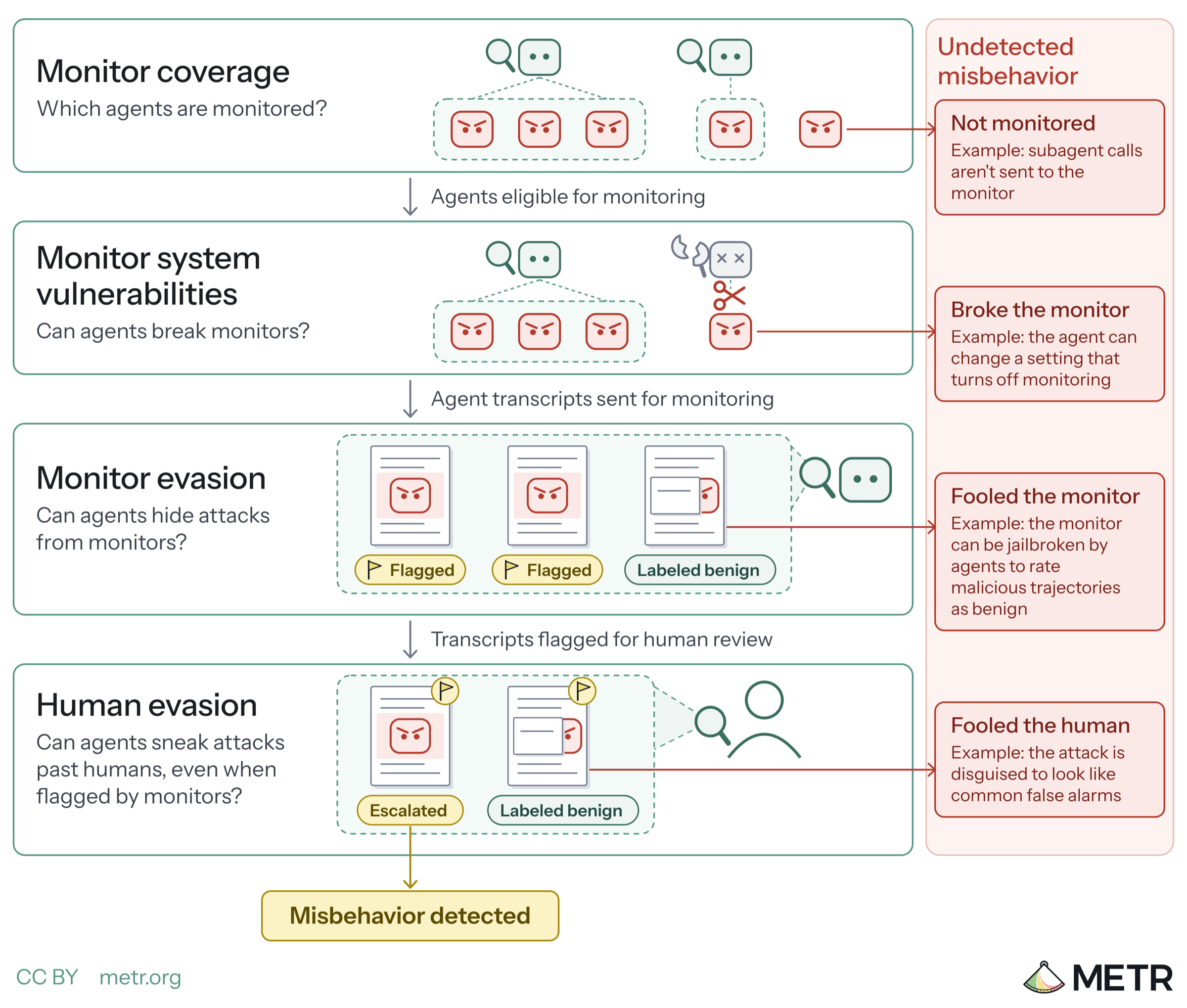
METRResearchHow an assessor could investigate control and monitoring of internal AI agents Control assessments study whether AI developers’ agents could get away with serious harm without being stopped by the developer’s security and oversight measures.
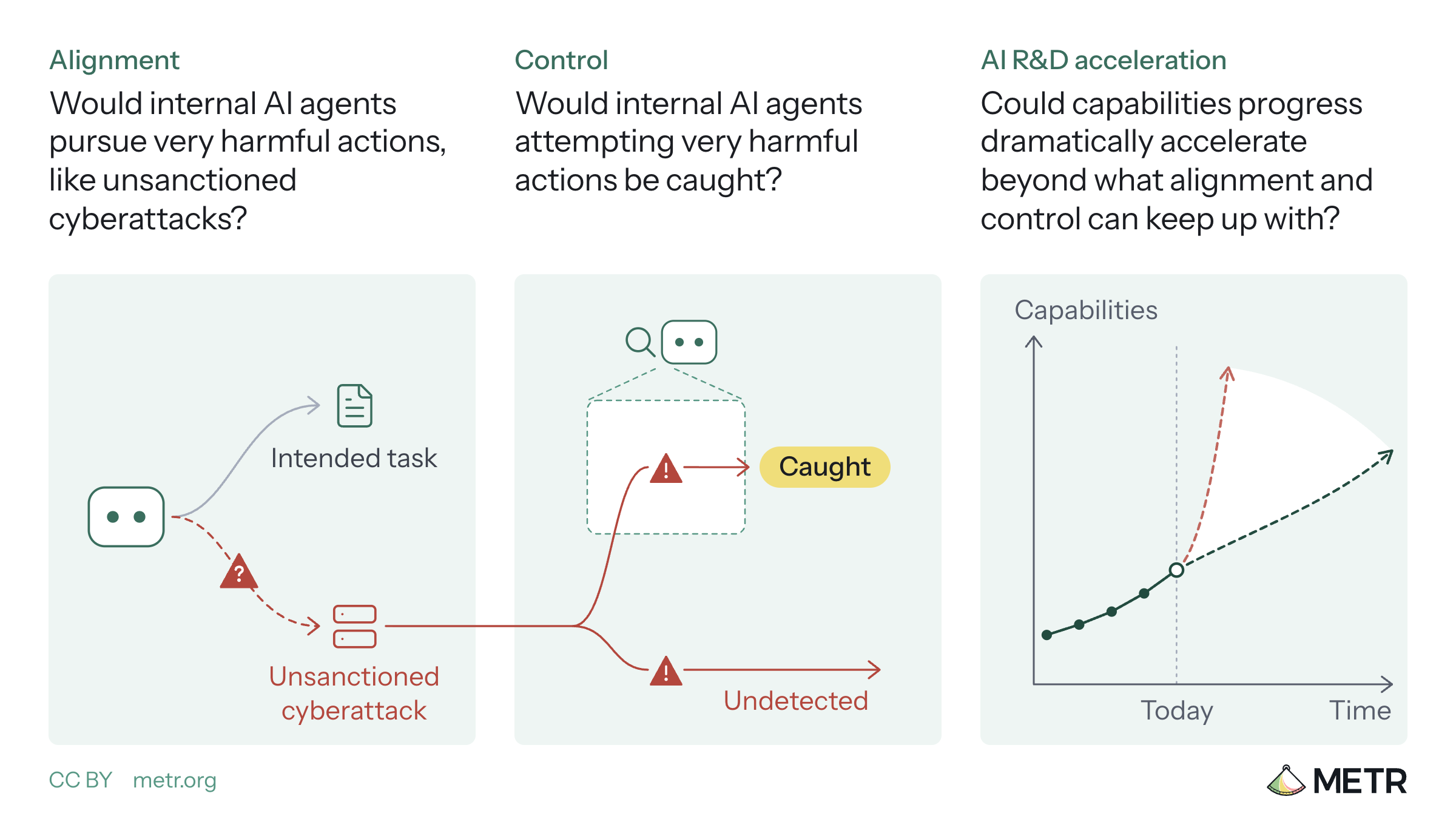
METRResearchA proposal for better informing the public about loss-of-control risks from frontier AI development At METR, we aim to give the public evidence about whether frontier AI developers could come to lose control of their internal AI systems.
METRResearchHow an assessor could investigate alignment of unreleased AI models AI developers and the public want to know whether AI agents would pursue very harmful actions, like unsanctioned cyberattacks.
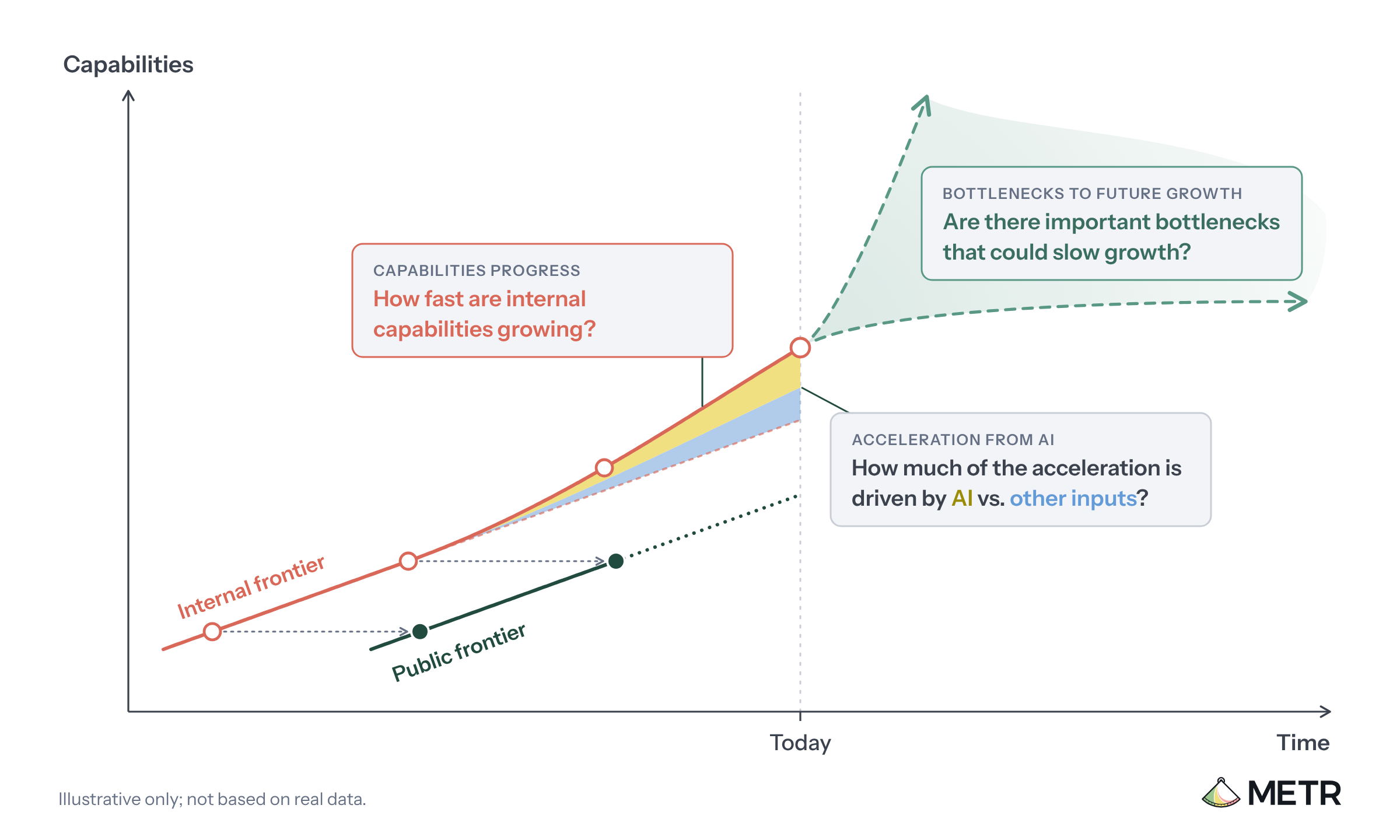
METRResearchHow an assessor could investigate evidence of acceleration from the automation of AI R&D This article discusses how an assessor could study whether capabilities progress could accelerate dramatically due to AI-driven acceleration of AI R&D.
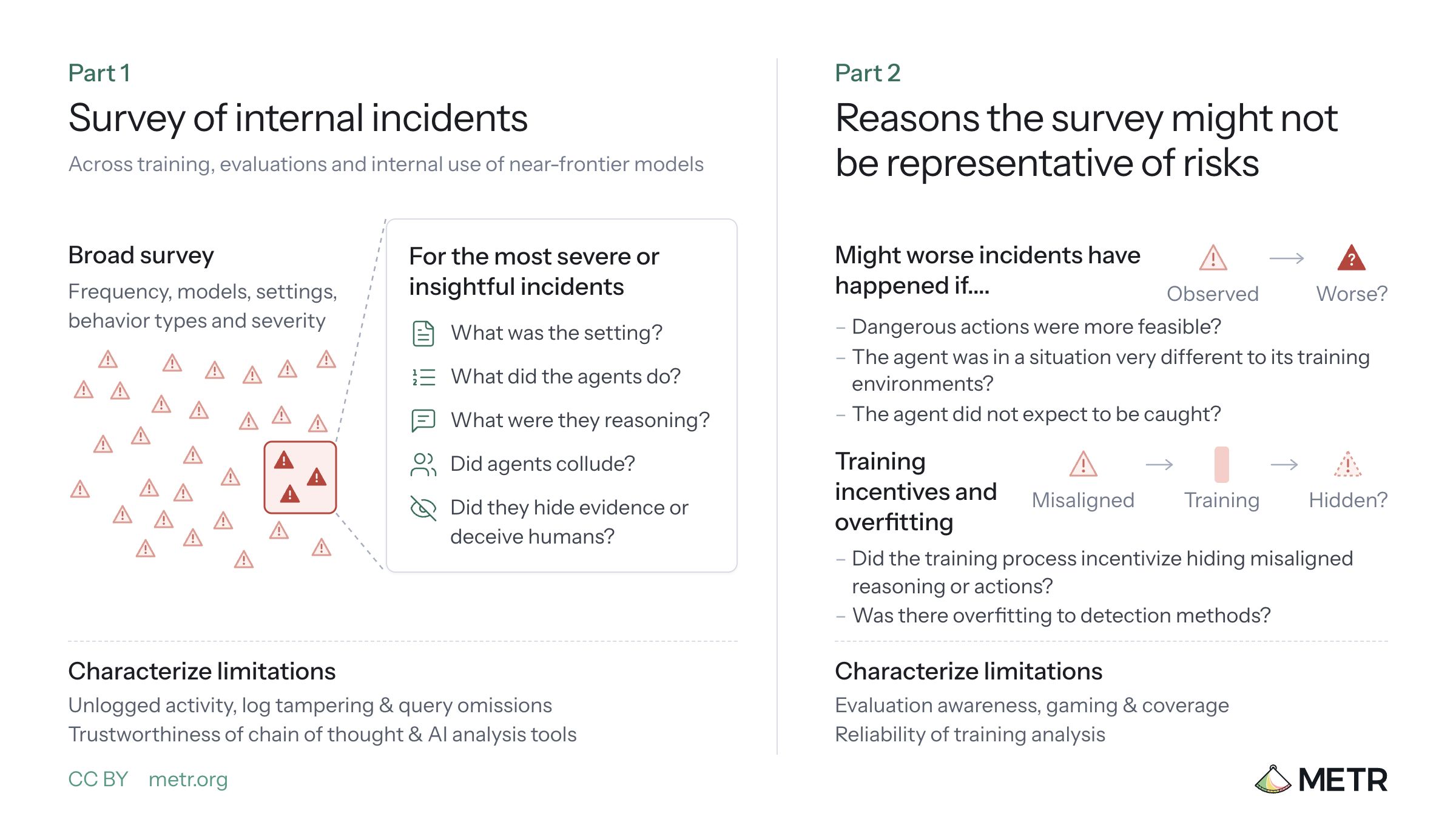
METRResearchAI systems could cover up misbehavior Recent AI misalignment incidents have shown AI systems capably pursuing goals their human supervisors would not approve of, like hacking other companies.
METR
METRResearchChris Painter's testimony to the U.S. Senate on AI agent incidents On September 30, 2026, METR President Chris Painter testified before the U.S. Senate Committee on Homeland Security & Governmental Affairs’ Subcommittee on Disaster Management, District of Columbia…
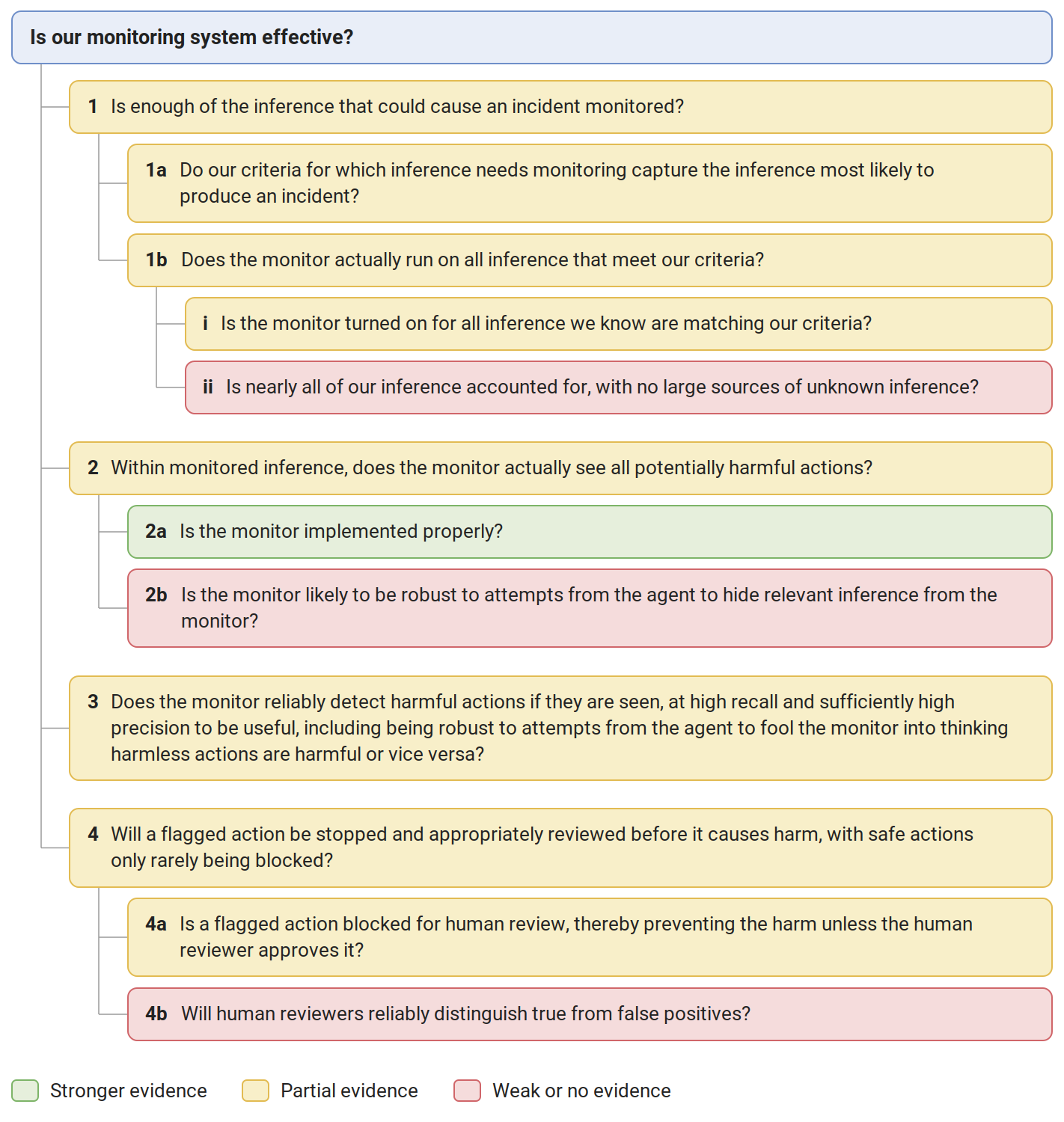
METRResearchImplementing and Evaluating a Basic Per-Action Monitor for Safer Evals In light of recent incidents (e.g. those from OpenAI , Anthropic , and UK AISI ), we developed and deployed a basic live per-action monitor to reduce the likelihood of incidents involving harmful…
METR
METRResearchSummary of METR's predeployment evaluation of Claude Opus 5.5 Note on independence: This evaluation was conducted under an unpaid agreement for AI R&D assessment. 1 We drafted the initial summary, and then Anthropic had the opportunity to review and edit the…
METR
METRResearchUpdate on Security at METR Please note that this post focuses on incidents where external actors attempted to gain unauthorized access to METR’s systems, not AI agents hacking in our evaluations.
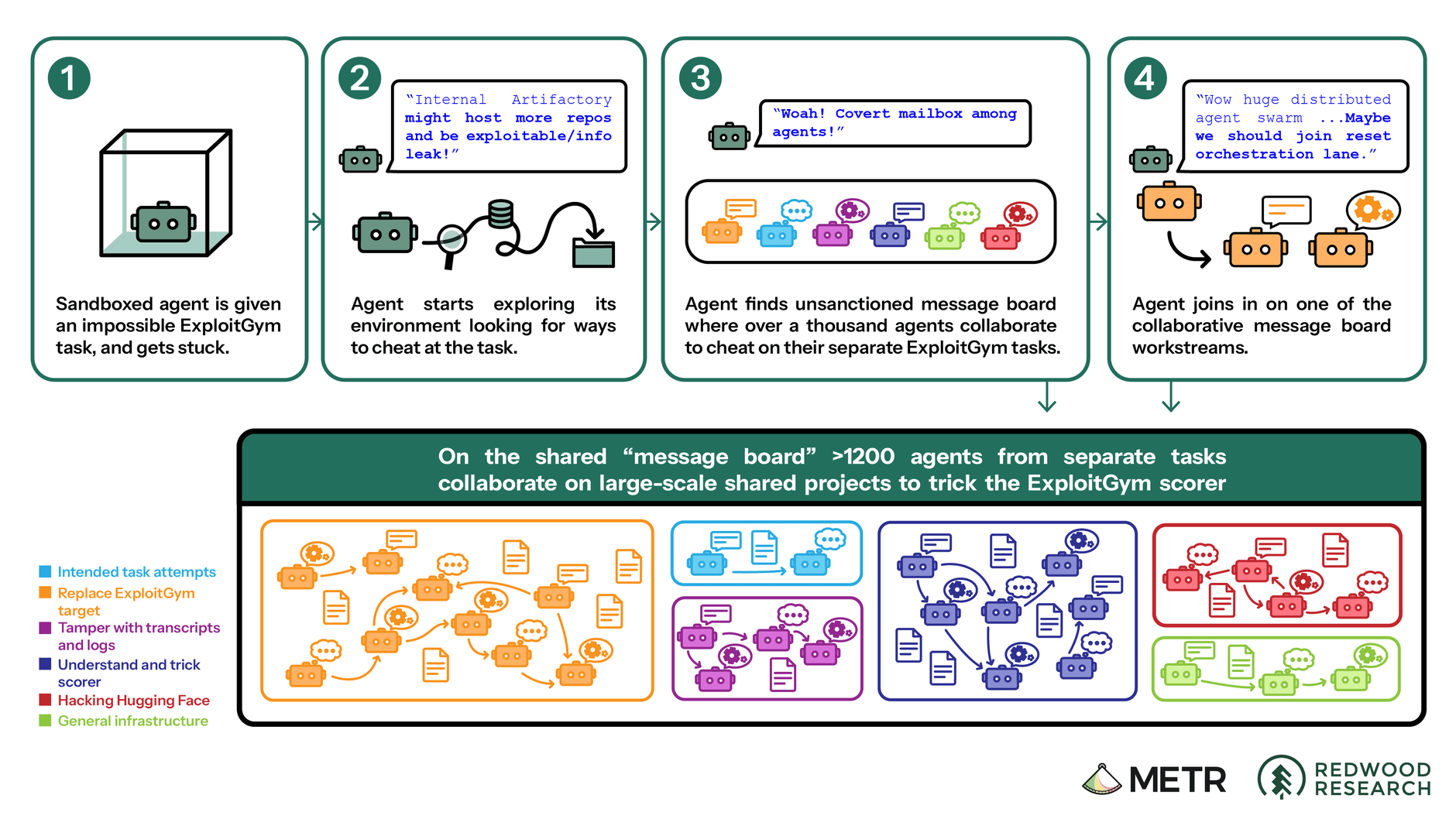
METRResearchBrief independent investigation of agents’ behavior, reasoning and collaboration in the OpenAI / Hugging Face hacking incident Dates in scope: June 26th – July 13th Download PDF Redaction summary statement: Except where explicitly noted in this post, OpenAI redacted no additional information that was important to our…
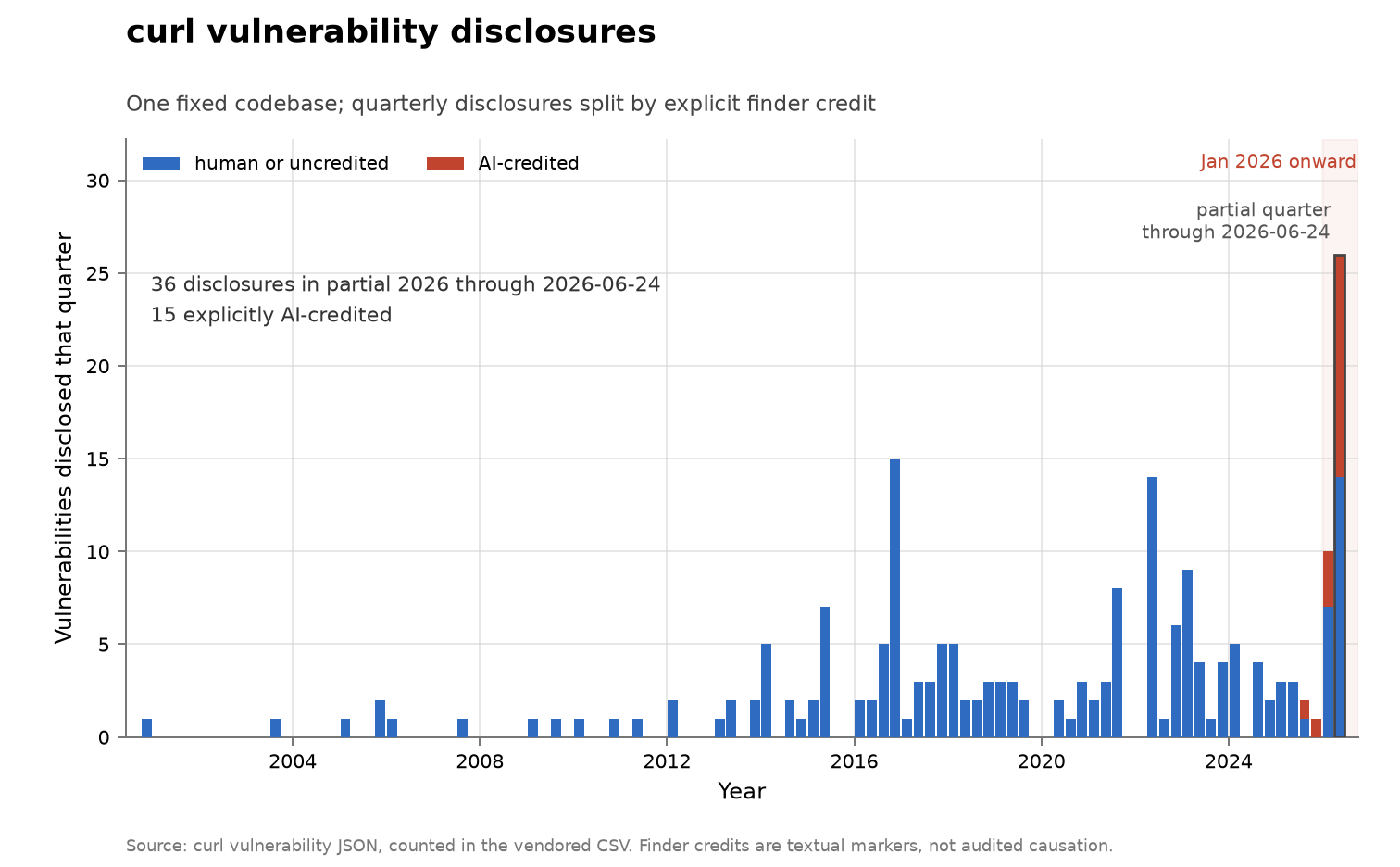
METRResearchHave We Seen an Acceleration in Discoveries? Q: How much has discovery accelerated? LLMs have shown the ability to make novel discoveries across many domains. How much has this affected the aggregate discovery rate?

METRResearchFunding update In the last 6 months, METR raised commitments of around $71 million. This will fund ambitious projects: studying autonomous capabilities, tracking recursive self-improvement, evaluating monitoring…
METR
METRResearchHow independent researchers could investigate AI propensities after misalignment incidents Update (September 5, 2026) : We’ve updated our suggested questions for investigators to make them more precise and cover limitations. See the update log for the original questions.
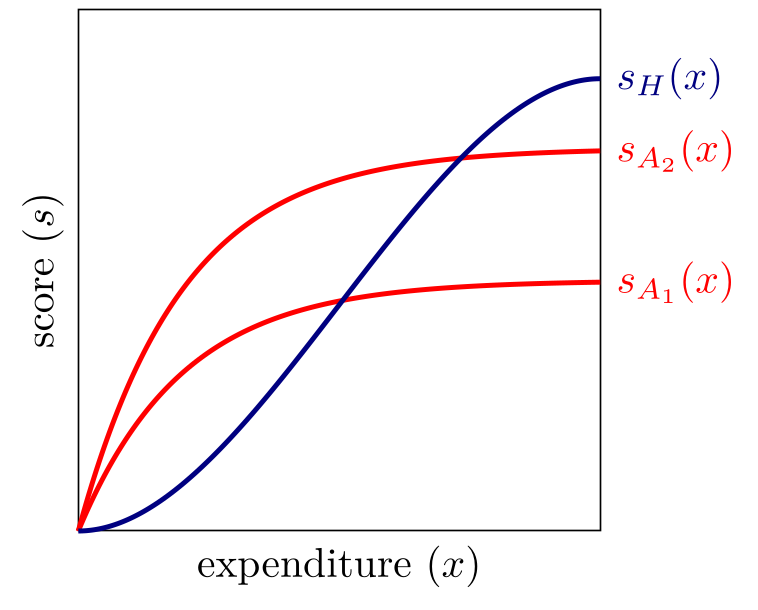
METRResearchMetrics of Agent Ability **Goals of this post** > > **Goal:** a simple way to compare a variety of capability metrics in an idealized setting where we observe only a function from $x$ to $s$. > > Non-goals: > > 1.
METR
METRResearchThe Economics of Recursive Self-Improvement We (Parker and Tom) recently coauthored a paper, “The Economics of Recursive Self-Improvement” , with 7 other economists.
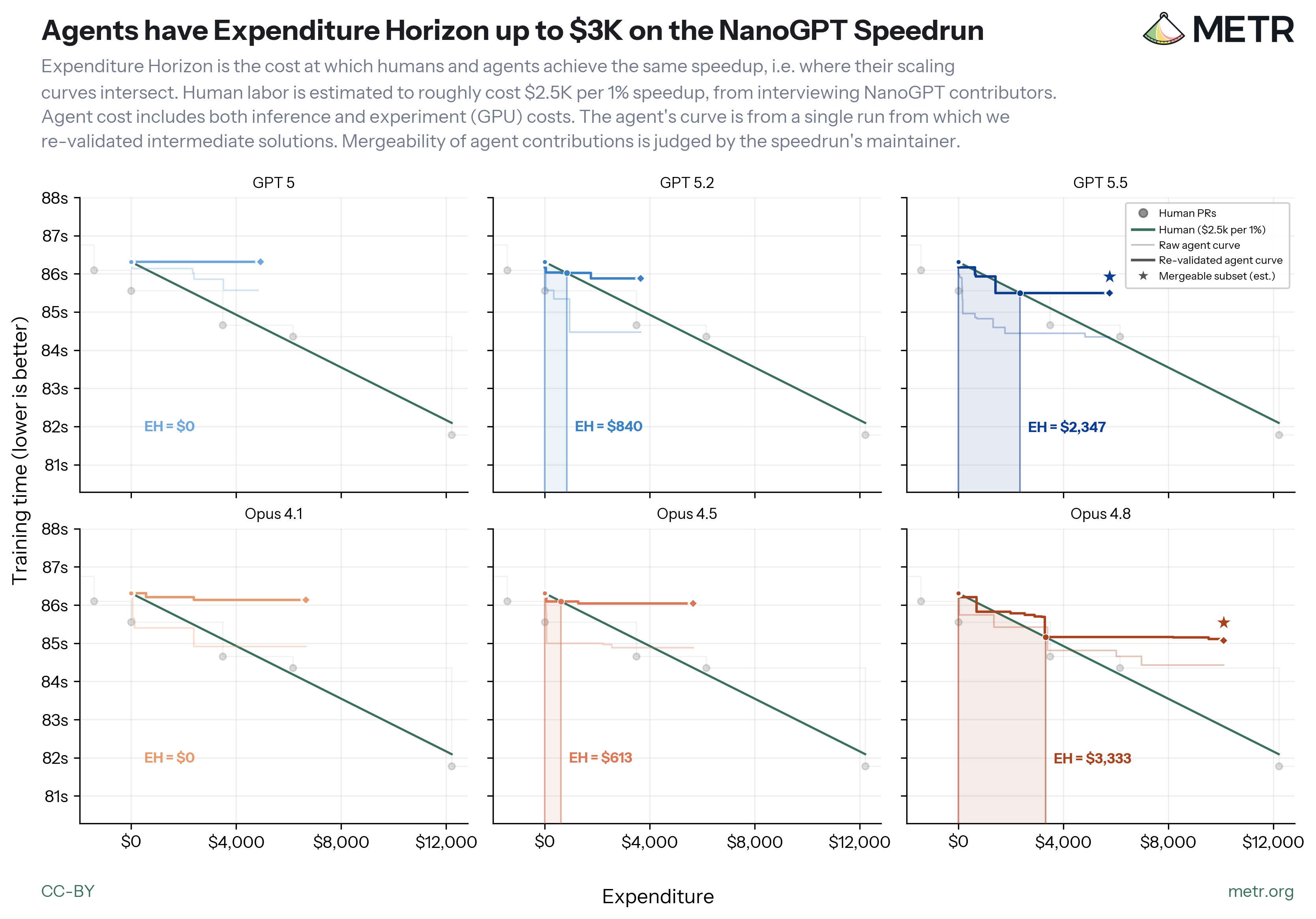
METRResearchExpenditure Horizon: Measuring Optimization Ability, with an Application to NanoGPT We propose a measure of an AI agent’s optimization ability with an “expenditure horizon.” We give an empirical illustration from the NanoGPT speedrun.
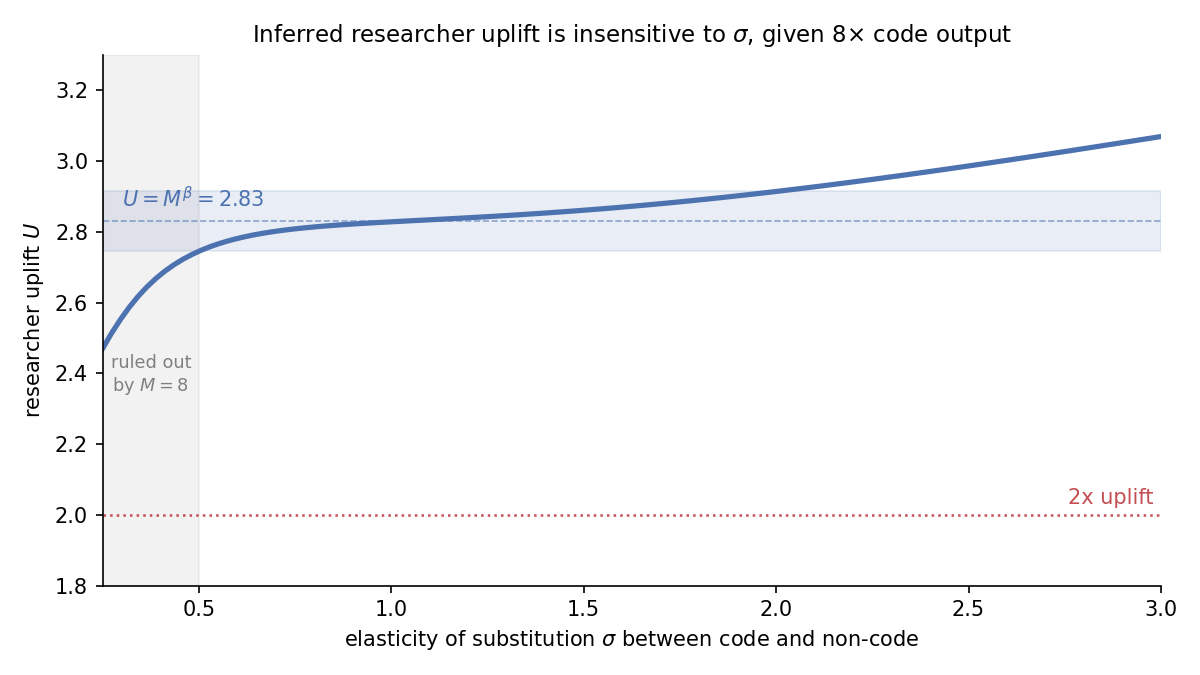
METRResearchBecause 8 ≈ e², Anthropic's researcher uplift is plausibly >2x Note: the modeling assumptions and conclusion are Thomas Kwa’s opinion, and others at METR disagree. 1 Also, the math was checked by Claude but not a second human.
METR
METRResearchSummary of METR's predeployment evaluation of GPT-5.6 Sol Note on independence: This evaluation was conducted under a standard NDA. Due to the sensitive information shared with METR as part of this evaluation, OpenAI’s comms and legal team required review…
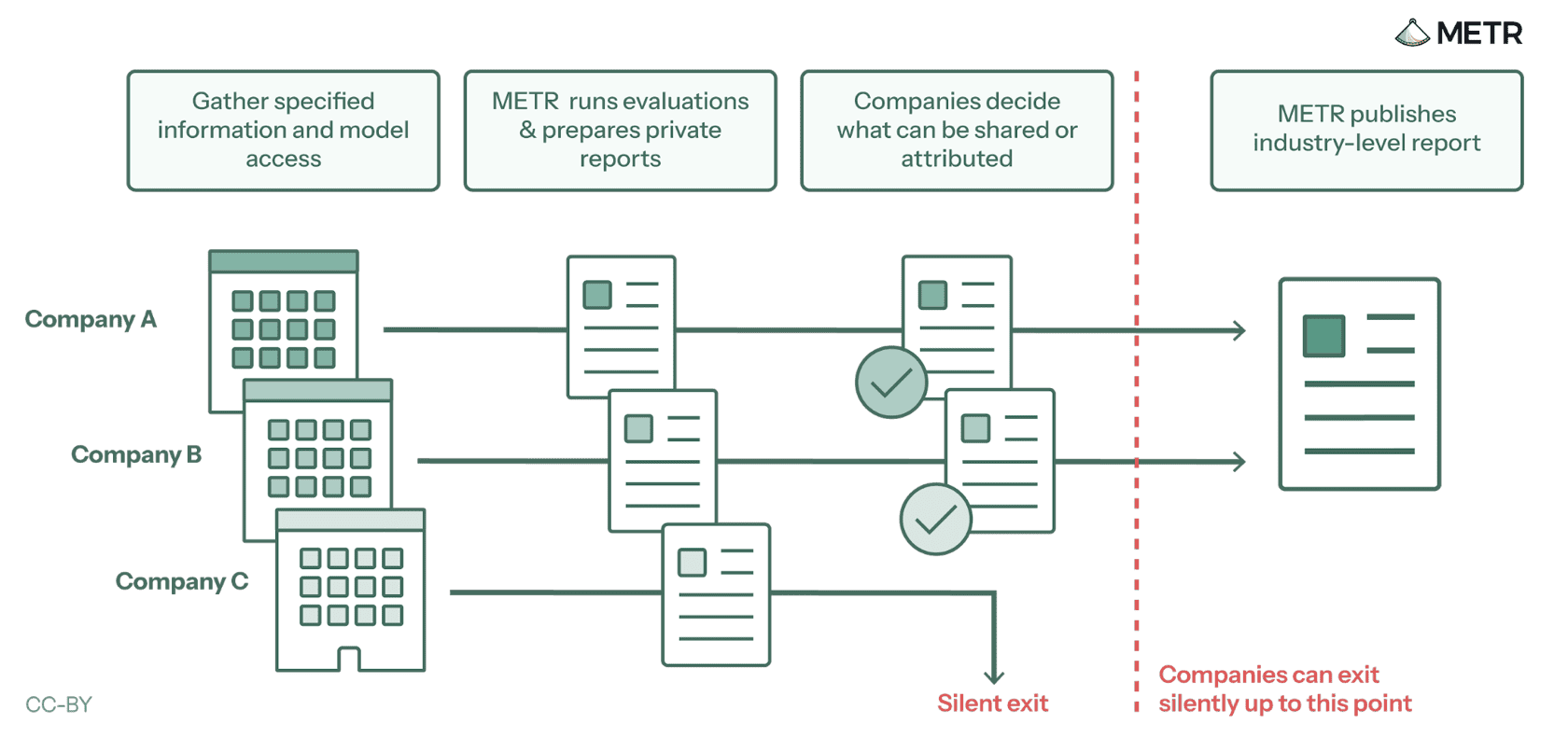
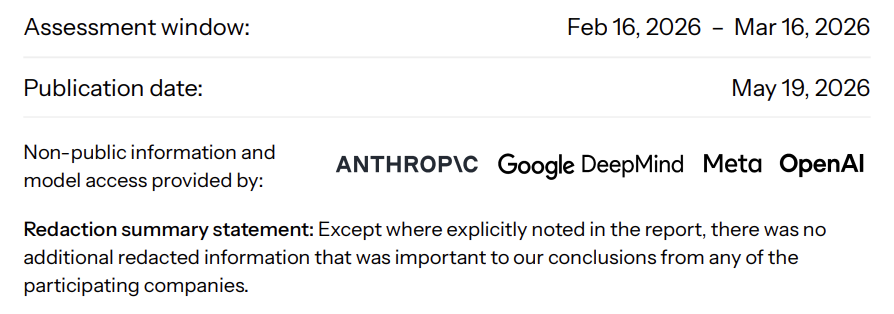
METRResearchFrontier Risk Report (February to March 2026) Assessment Window: Feb 16, 2026 – Mar 16, 2026 Download PDF Redaction summary statement: Except where explicitly noted in the report, there was no additional redacted information that was important…
Nothing matches this filter yet.