Amazon Science
25 stories

Amazon ScienceResearchStrengthening AI safety evaluation through independent third-party review As frontier AI models grow in capability, so does the importance of ensuring that safety evaluations are rigorous and comprehensive.

Amazon ScienceResearchCan we change an AI model’s architecture without retraining it from scratch? AI agents are rapidly scaling: longer sessions, deeper reasoning chains, more autonomy. But the Transformer architecture underneath them still pays a memory tax that grows with the number of tokens…

Amazon ScienceResearchGraph-centric agentic intelligence Graphs encode relationships. In a world where AI agents need to reason about complex systems, not just retrieve information, graph structure provides the scaffolding for causal inference, dependency…
Amazon ScienceResearchA kernel-centric path to real-time video generation on Trainium In 2018, Jürgen Schmidhuber — who in 1990 was the first person to propose world models as a machine learning concept — published a paper with David Ha.

Amazon ScienceResearchAmazon launches research initiative with Stanford University to advance AI and science Amazon has launched the Stanford and Amazon Research Initiative with Stanford University, a new framework for advancing research at the frontiers of AI, energy, and healthcare.

Amazon ScienceResearchAdvancing AI for biology: Teaching models to design and characterize antibodies Monoclonal antibodies are one of the workhorses of biopharmaceutical development, with over 100 FDA-approved drugs and well-established manufacturing, regulatory, and clinical-development pathways.

Amazon ScienceResearchWhy don’t machine learning research agents overfit? Machine learning, at its core, is about generalization, not memorization. You hand your learning algorithm a pile of training examples and use them to fit a model.

Amazon ScienceResearchDeveloping provably correct Rust code with Verus Many open-source and industry software projects, including several here at Amazon, are embracing the Rust programming language, since it provides performance and flexibility similar to that of the C…

Amazon ScienceResearchWhen LLM judges agree, should we believe them? Imagine evaluating a retrieval-augmented-generation system. A user asks a question, the system retrieves a text passage, and an LLM judge decides whether it’s relevant.
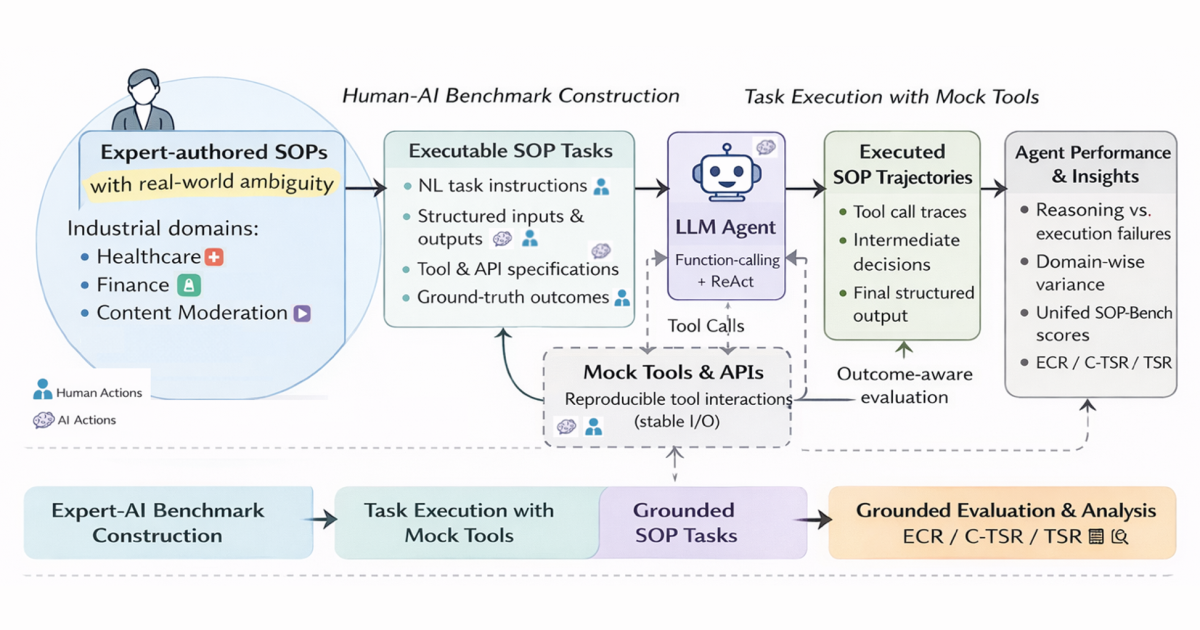
Amazon ScienceResearchSOP-Bench: A new benchmark for evaluating AI agents on real business procedures A standard operating procedure, or SOP, is the written set of steps an organization follows to correctly complete an important piece of routine work the same way every time.
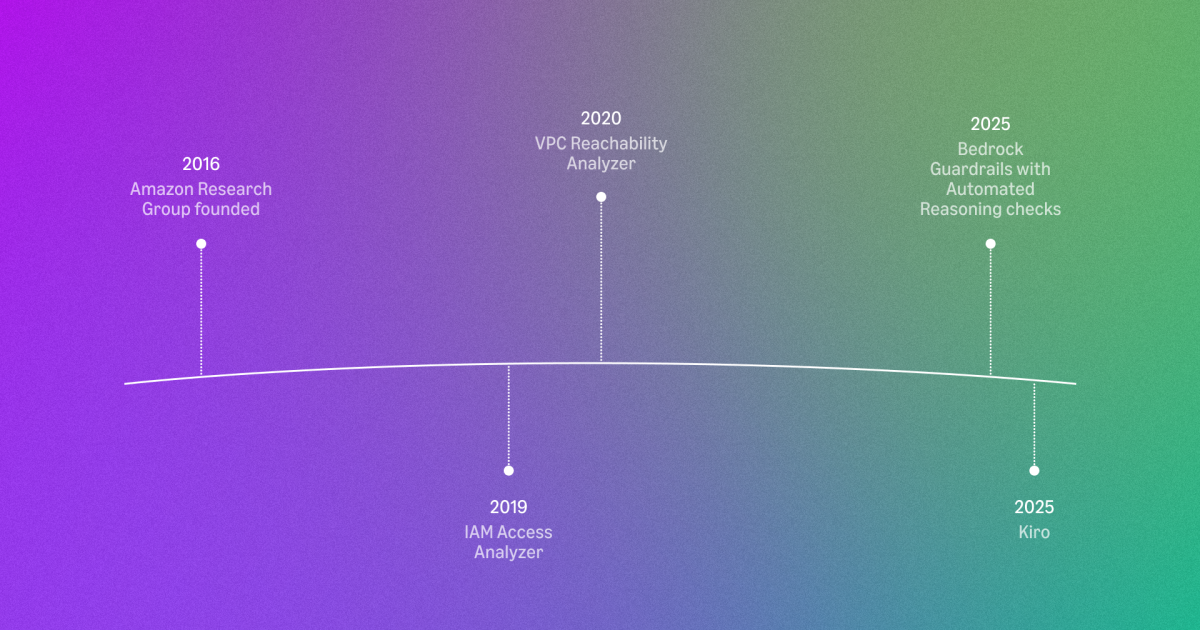
Amazon ScienceResearchA decade of mathematical certainty: Reflections on the Automated Reasoning Group In 2016 a small research team at Amazon announced our presence to the world with the launch of the Automated Reasoning Group (ARG).

Amazon ScienceResearchAWS Trainium Frontier competition: Co-design models and kernels on purpose-built AI chips Modern LLM architectures have co-evolved within a single hardware family. The shapes of our attention mechanisms, the structure of our multilayer perceptrons (MLPs), the choice of numerical formats…

Amazon ScienceResearch34 Amazon Research Awards Build on Trainium recipients announced Build on Trainium is a $110 million credit program focused on AI research and university education aimed to support the next generation of innovation and development on AWS Trainium.
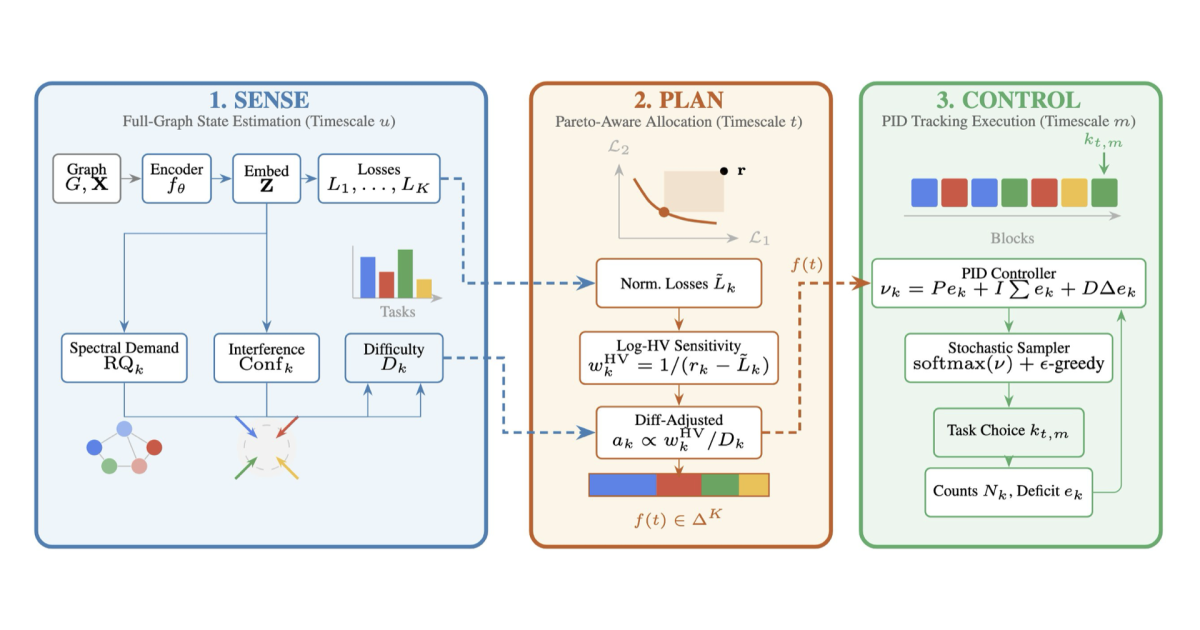
Amazon ScienceResearchHow controllers from industrial machinery can coordinate multitask machine learning Training a machine learning model to handle multiple objectives simultaneously is a bit like trying to follow GPS directions to several destinations at once: the routes often conflict, and…

Amazon ScienceResearchA new benchmark for evaluating patient-facing health AI agents When a virtual patient in a benchmark scenario tells an AI agent they're feeling feverish, or hopeless, the difference between a safe response and an unsafe one often comes down to clinical design…

Amazon ScienceResearchAmazon is investing in the Lean Focused Research Organization We want to tell you about an investment we're making and why we're excited about it. As AI agents increasingly make decisions that move money, approve claims, and operate critical infrastructure, the…

Amazon ScienceResearchAmazon and University of Michigan give robots a sense of touch From warehouse automation to surgical assistance, many real-world applications depend on robots performing delicate, contact-intensive tasks.

Amazon ScienceResearchCapturing token IDs during agentic interactions for better reinforcement learning Reinforcement learning (RL) is one of the techniques we use to make language models better at sustained, multistep tasks like writing code, navigating a website, or carrying out a research workflow.

Amazon ScienceResearchHow Amazon tracks carbon intensity across its operations At Amazon, we believe that as our strategy to reach net-zero by 2040 evolves, we need to continue to raise the bar on what and how we measure.

Amazon ScienceResearchThe fuel of the future is already here: Why TRISO matters Amazon is investing in next-generation nuclear technology to meet the rising energy demands of AI infrastructure and cloud computing, and at the heart of that technology are tristructural isotropic…
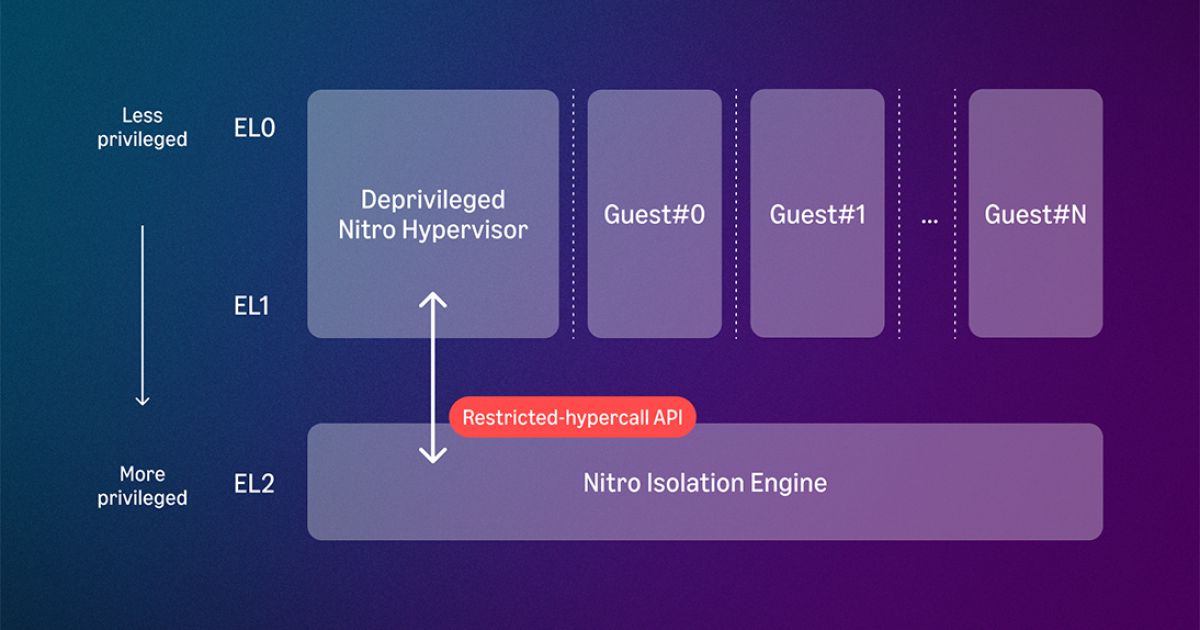
Amazon ScienceResearchEC2’s formally verified “isolation engine” provides mathematical assurance of virtual-machine isolation Today we announced the general availability of the new M9g and M9gd instances of Amazon Web Services’ (AWS’s) Elastic Compute Cloud (EC2), the first instance types powered by Graviton5, the latest…

Amazon ScienceResearchGraviton5’s improved design increases speed and energy efficiency — beyond Moore’s law AWS Graviton processors have improved steadily across generations, with each iteration delivering advances in computational performance, price performance, energy efficiency, and memory capacity.

Amazon ScienceResearchReal-world grounding in agentic AI The year 2026 marks a definitive shift in the AI landscape: we have moved from models that simply know to agents that do.

Amazon ScienceResearchBridging intent and execution in agentic systems AI agent performance is not just a modeling problem; it is fundamentally a systems problem. A modern agent combines an LLM with a harness, software that mediates the LLM’s interaction with tools and…
Nothing matches this filter yet.